
The Sticky Rice Whisky Debate
By Hayden Wood ·
Grand Talon Rice Whisky Launch Sparks Debate on Classification and Tradition. So What's so sticky about this?
In the face of dozens of other rice whiskies from Japan and Taiwan using a similar method for conversion of rice starches to sugars in the fermentation process, Jay Roberts, CEO of Nine Rivers Distillery in China, defends his employee’s (Tara Zheng郑) position on the classification debate. He challenges the use of "qu" (a mix of yeast, and mould) in the fermentation process of Grand Talon Rice Whisky (a rival distillery based in Southern China), questioning its alignment with traditional malt whisky standards.
Pearl Red Distillery & Rice Winery, (Set on a tea plantation) Guangdong, China
In response, Justin Zhang, owner of Pearl Red Distillery, asserts that they’ve consulted with the China Alcoholic Drinks Association and received approval for producing Rice Whisky under their current SC Code for Alcohol Beverage. He emphasises that while there are no existing standards for Rice Whisky, they comply with all Chinese regulations.
As Pearl Red are the first to produce Rice Whisky in China, the regulators of the SC Code program are building a new ‘Rice Whisky’ category based on the new product Grand Talon rice whisky has created.
Some Transparency Surrounding This Debate as Raised by Jay Roberts and Tara Zheng of Nine Rivers Distillery, China.
Just like Bourbon is aged White Dog, Peruvian Brandy is aged Pisco and local whisky can be called aged Moonshine, Rice Whisky from China is aged Baijiu. If the base spirit were made in Australia, we would call it new make rice spirit. If aged, you could call it aged new make spirit from rice – or Australian Rice Whisky if you wanted to.
So, call it what you like. Rice Whisky, it’s delicious juice, spicy, fruity and packs a punch at 43% ABV and we don’t mind if you call it Barrel-aged Baijiu, Rice Whisky or Grand Talon.
There is nothing to read on this topic with regards to Rice Whisky which actually explains why Jay and Tara would say such a thing. There is no legislation, no regulatory body and no authority that provides a guide to making Rice Whisky with such instruction. We think Jay and Tara are getting confused with Single Malt Whisky production in Scotland.
For Australian manufactured goods, the Excise Act 1901 as amended by “The Excise Laws Amendment
(Fuel Tax Reform and Other Measures) Act 2006” stipulates:
“whisky” means a spirit obtained by the distillation of a fermented liquor of a mash of cereal grain in such a manner that the spirit possesses the taste, aroma and other characteristics generally attributed to whisky.
Correct. And in time there will be a category for Rice Whisky of which Grand Talon has set the standard as an innovative brand. This doesn’t mean the words Rice Whisky cannot be used on a label. It means that being bold enough to go first means other will try and knock you down.
It is not a production regulation of any authority anywhere in the world that makes it a that requirement that Rice Whisky must be made with copper pot stills. Nor the amount of times the fermented mash needs to be distilled.
While stainless steel stills are use in the production of Grand Talon Rice Whisky and the Baijiu made at Pearl Red distillery, there is not one piece of regulation from any whisky body in the world that states rice whisky must be distilled a certain amount of times in a specific type of style in a particular type of still. For the record, the rice mash used in the making of Grand Talon is distilled only once for six hours.
It’s not our place to tell Jay how to manage his business nor his employees, he has after all the internet police for that. We do however maintain that such a stance on corporate governance over employee behaviour is just bad for business.
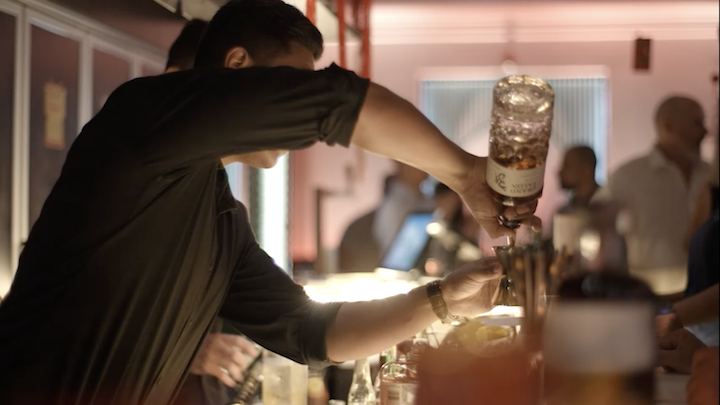
The debate unfolded at Ni Hao Bar, on Feb 13, 2024 while offering a platform for industry veterans to explore the nuances of this unique product. I emphasised the event’s role in fostering dialogue and introducing partners like Riedel Glassware, Fever-Tree mixers, and Uber Bar Tools to a rich, 700-year-old history of traditional liquor production. Also, I help everyone to understand that this is rice whisky and not single malt whisky fro Scotland.
Check Out the Sydney Grand Talon Whisky Event.
We debated regulations of the country the product is destined for as an example of rules to allow or disallow a label such as Whisky. The point was raised that Whisky in Australia must be distilled twice whereas Grand Talon is distilled only once. Fair assessment but there isn’t any regulation, even from the Australian Distillers Association, that can substantiate this claim.
Yeah, Nah, Yeah, Nah, Nahhhh Tara.
Poor Tara has her nickers in a twist here because Pearl Red Distillery is actually doing something called innovation. Something perhaps if were tried by Tara she might actually get off ChatGPT to write her retorts.
Xiao Qu in the case of Grand Talon Rice Whisky is used to turn starches to sugars. There is no regulation to show this is a prohibited process in the production of Rice Whisky, anywhere. Check out the Australian Distillers Association stance on Whisky.
Xiao Qu Production Uses a Process Hundreds of years Old
Sebastian Reaburn Chimes In On The Debate
“Tara Zheng not all whisky requires malted barley, and most blended is a combination of grain, mostly unmalted wheat. So rice is a perfectly acceptable cereal grain to use. But it could not be called single malt whisky. There are also other options beside koji to convert the starch, the easiest being simply cooking the rice. As to whether people are prepared to spend their money on it? That is the job of the brand and distiller to make a product that is compelling.” 😁
The only thing that aids her complaining to the world about this is the use of the explanation of Xiao Qu as yeast. It does in fact include mould and is a proprietary recipe made onsite at the distillery. The reference to an easy explanation such as Yeast helps translate Xiao Qu’s purpose and function in the making of Rice Whisky.
Further more, if Nine Rivers Distillery had actually produced anything in the way of Whisky beyond a fledgling slightly over optimistic promise to sell a barrel of new make spirit to a heavily cautioned whisky audience, then their claims could be somewhat taken as considerable. But as it stands, Nine Rivers are just a website and a whole lot of hot air presenting themselves as yet another “Barrel Investment’ program that has about as much value in their claims as Greta Thunberg’s crypto currency.
Naaaahhhhhhhh Tara, to Assume makes an 'Ass' out of 'U' and (not) 'Me'.
Hakka culture has been employed in the process of using traditional clay vessels for fermentation of rice wine which is used in the base of Baijiu and Grand Talon Rice Whisky.
Rice is fermented in clay vessels and then strained using cane baskets.
Modern innovation developed by Pearl Red Distillery has created a new solera style fermentation for the rice mash using the traditional clay vessels. They start fermenting for 8-10 days, then moving from 20 Lt vessels to 250Lt vessels for a second period of 8-10 days.
Traditionally, broiling rice wine outside in fiery displays as a means of stopping the fermentation process has been done for centuries and also the use of Xiao Qu in the saccharification process are all methods used at the Pearl Red distillery and are derived from hundreds of years of Hakka and Han culture.
The processes used at Pearl Red are in fact traditional, labour intensive but also modern and innovative and have a time honoured stamp of approval from local government in China
In a NutShell, This one is Cracked.
Now it’s clear that Tara knows jibber jabber. She speaks online as if someone stole her Barbie. Yelling angrily and resentful like a child without any curiosity or good taste. She screams her opinions as if she had descended from heaven with stone tablets and the rules of the internet to which she were the sole arbitrator.
Her boss, Jay, explains that he receives dozen of complaints each year about her. As her boss and protector of the “Barrel Investments”, he does nothing about Tara devaluing the stock as if she perhaps has some edge over him – like she asserts with not qualms. He allows and pays for her to pass off and present herself as the “Internet Police” with arrogance as her only authority (sounds dodgy). But altruistically her time is paid for by the CEO of a competitive distillery of which she slanders.
Sounds more like whisky envy than fake policing don’t you think? Poor form from where I sit. Jay and Tara had me crying like a baby with how ridiculous their claims were. So sad, so, so, so, so, so sad. The End.
Grand Talon Rice Whisky Tasting & Allocation Offer
Get the first Barrel-Aged Rice Whisky from Mainland China on Allocation In The Year of the Dragon 2024:
One of One Tasting at Your Venue
- Trade Only Tasting 30-Mins
- Access to Promotional Discounts & Collaborations
Good Times, People & Culture
Farm to Glass Drinks Industry Recruitment
> Find Out More.

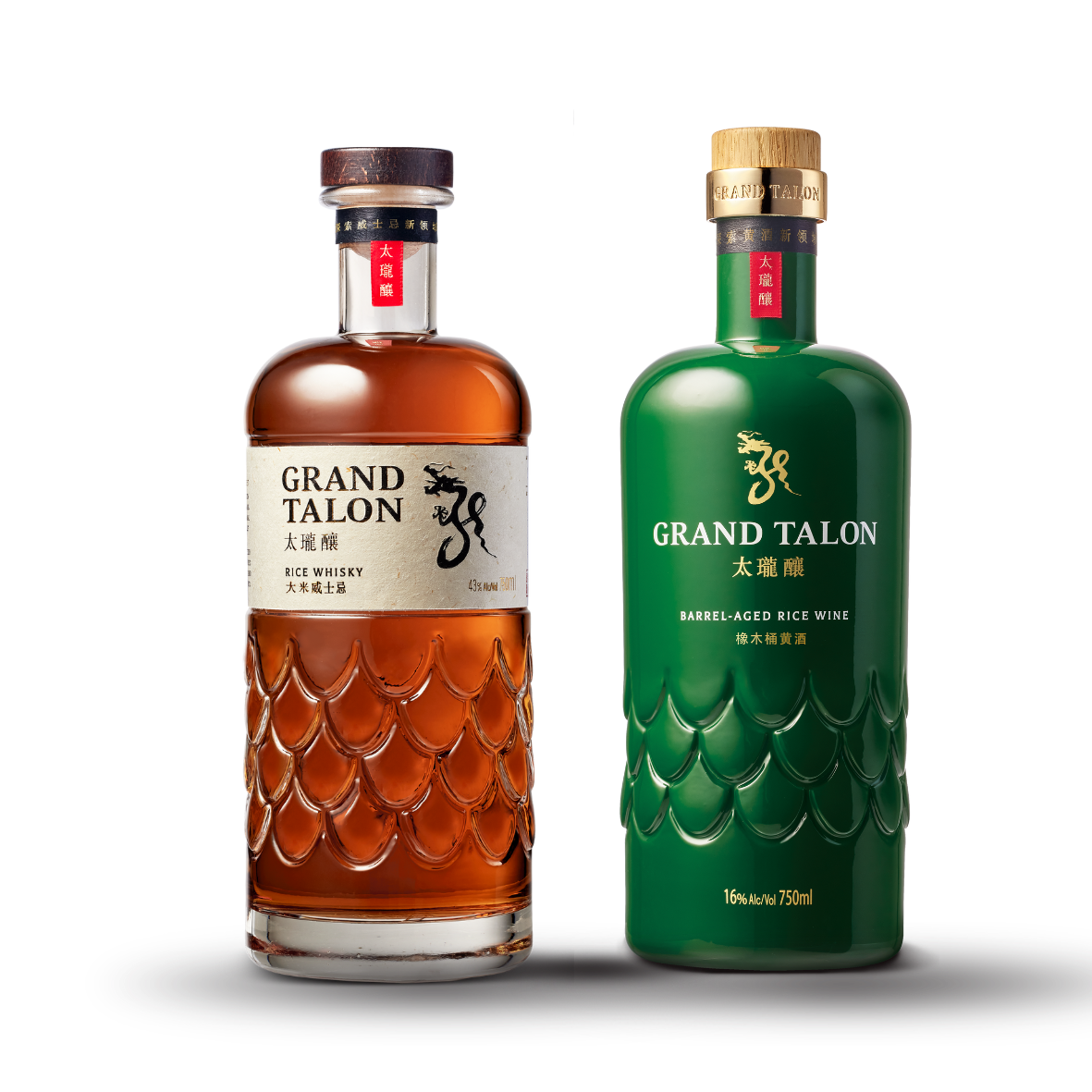
Grand Talon Rice Whisky from Pearl Red Distillery, China
Challenge Accepted: Grand Talon Rice Whisky and Pearl Red Distillery:
Enter Grand Talon Rice Whisky and Pearl Red Distillery in Guangdong—a Zhang family effort that rose to the production challenge in 1997 taking over from production that started in 1950, and is set to redefine China’s place in the whisky world. Set on a tea plantation in the mountains of Guangdong, 3000 year old traditional fermentation and 700 year old
distillation techniques of The East meet the fine cooperage skills and aging in virgin French and American oak barrels from The West. Grand Talon Rice Whisky, crafted from the finest rice from northern China, embodies a renaissance of Chinese artisanal excellence—a unique expression of whisky forged in Guangdong Province and packaged in a world packaging awarded presentation.
So, when you ponder world-class whisky, let China be part of that contemplation. With Grand Talon Rice Whisky and Pearl Red Distillery leading the charge, the perception challenge is met with determination and a commitment to crafting whisky that transcends borders.